
الإشعارات
نشرت من supriya maximize
مصنفة في الأعمال والمشاريع 165 مشاهد
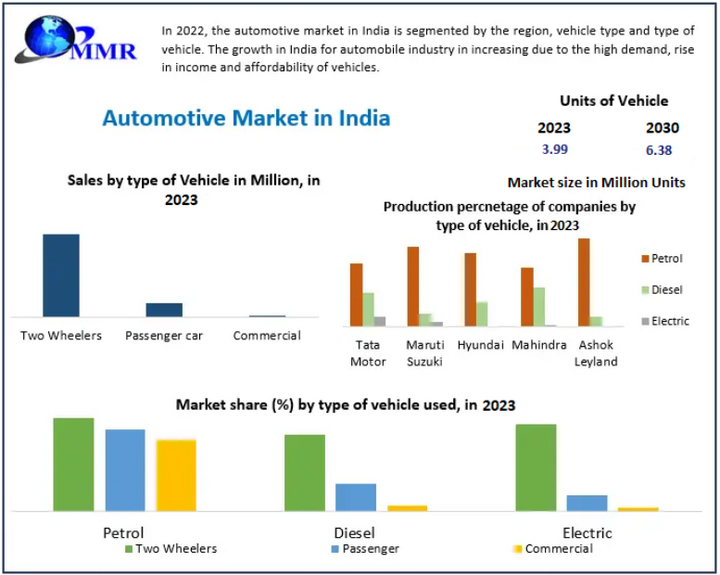
Indian Automotive Market Expected to Reach 6.38 Million Units by 2030, Driven by Urbanization and Electric Vehicle Adoption
The Automotive Market in India was valued at 3.99 million units in 2023 and is projected to grow at a CAGR of 6.94% from 2024 to 2030, reaching 6.38 million units. The market’s growth is fueled by rising urbanization, increasing disposable incomes, government initiatives promoting electric vehicles (EVs), and advancements in automotive technology.
Market Overview
The Indian automotive industry encompasses the production, manufacturing, and sale of various types of vehicles, including passenger vehicles, commercial vehicles, two-wheelers, and three-wheelers. In recent years, the industry has experienced significant growth due to supportive government policies, rising middle-class income, and increasing exports of Indian-manufactured vehicles. Innovations in connected cars, hybrid electric vehicles, and adoption of cleaner fuels have also contributed to the market expansion. The market report provides a comprehensive analysis of industry dynamics, segmentation, competitive landscape, and regional insights.
Need Reliable Market Data? Save 30% This New Year@https://www.maximizemarketresearch.com/request-sample/86126/
Market Trends
The Indian automotive market is witnessing key trends such as the rapid adoption of electric vehicles, increased integration of connected car technologies, and growing demand for affordable two-wheelers and passenger cars. The urban population is increasingly opting for personal vehicles, driving demand for small and mid-sized passenger cars. Additionally, technological advancements in autonomous driving, internet-connected vehicles, and battery-efficient EVs are reshaping the competitive landscape.
Market Drivers
The growth of the automotive market in India is primarily driven by rising urbanization, increasing disposable income of middle-class families, and the country’s young population. Government initiatives such as Make in India, Atmanirbhar Bharat, and the Automotive Mission Plan (2016-2026) are supporting the adoption of EVs and fostering the development of domestic manufacturing and R&D facilities. The demand is further fueled by increasing exports of Indian vehicles and the push for cleaner, more sustainable energy sources in transportation.
Market Segmentation
By Vehicle Type:
By Fuel Type:
Make Smarter Decisions in 2026 — Get Your Research Report Now@https://www.maximizemarketresearch.com/request-sample/86126/
Key Players
Regional Analysis
Conclusion
The Indian automotive market is poised for steady growth through 2030, supported by urbanization, rising incomes, technological advancements, and strong government initiatives promoting electric vehicles. The continued development of connected cars, EV infrastructure, and efficient manufacturing practices will enhance market competitiveness and consumer adoption across India.